That frayed seam on the corner of a premium fabric sofa is where it all starts. You’ve had it for three humid seasons, maybe less, and the threads are pulling apart where the cushion meets the arm. It’s not the fabric itself failing; it’s the joinery underneath giving way, letting the tension show through the top layer. In a compact 4-room BTO living room, that corner gets leaned on, sat against, and stressed every single day—it’s the structural weak point announcing itself.
Look past the upholstery. That seam is telling you the frame inside isn’t holding its shape anymore. The wood or plywood joints have shifted, or the internal supports have loosened under constant load. Humidity around 80%+ can make things move, but daily use is the real culprit here. A sofa that costs over SGD $2,000 shouldn’t show this kind of wear so quickly; it’s a sign you need to inspect what’s beneath the surface before you commit.
So in a showroom, you don’t just test the cushion comfort. You need to get your hands on the frame. Press down hard on that same corner joint, feel for any creak or shift. Try to lift one end slightly—does the whole unit feel solid and unified, or does it wobble and flex in sections? A good frame, kiln-dried hardwood or stable plywood, won’t telegraph its stress through the fabric after a few years. A poor one will, and that frayed seam is the first whisper.
There’s honestly no exception here. If you see any hint of a seam pulling or fabric straining over a joint on a display model, walk away. That’s a premonition of what you’ll get in your own flat after the warranty expires. Focus on the skeleton, not the skin. The real test isn’t how plush it feels on first sit, but how silently it bears weight over time.
You sit on a sofa, and the cushions feel plush and uniform. But a few months in, you notice a distinct dip where you always settle—that’s the frame giving up, not the foam. A compromised timber or plywood structure doesn’t just crack; it bows subtly, creating uneven support across the seat deck. The centre might sag while the ends stay firm, or one side drops lower than the other. That’s why testing in a showroom isn't just about the initial softness—you need to check for consistency across the entire length.
Walk the sofa. Sit at one end, then the middle, then the other end. Pay attention to whether your hips sink to the same depth each time. A good frame provides a level base, so the cushion compression feels even. A weak one creates a slope, and over time, that slope gets worse. In a typical 4-room BTO layout, where the living room sofa becomes the family’s daily anchor, this unevenness translates directly into discomfort—one person always gets the bad seat.
Look beyond the upholstery. Ask about the frame construction; solid-wood or kiln-dried plywood outlasts cheaper boards. But even a decent material can fail if the joinery is poor or the support legs are spaced too widely. That’s the counterintuitive part: a sofa that feels solid on a single, brief sit might still have a frame that’s destined to warp under sustained, distributed weight. The test is to apply pressure along the entire seat line, not just a single spot.
So, commit to a sofa with a frame you can trust. The one real exception? Maybe a rarely-used accent chair in a corner—where aesthetic outweighs daily function. For your main living area, a compromised base will shift your comfort, and that’s a flaw you can’t fix later.
That's the thing you want to catch before you buy. It's not about the cushion fabric or the stitching—it's about the hidden metal parts that do the actual work. On a premium recliner or sofa bed, the hinge is where the stress concentrates every single time you fold or unfold. Over years, even with light use, the repeated bending can cause microscopic cracks in the metal. In a showroom, you can't see those cracks yet, but you can check for signs. Look for any discolouration, like rust spots or a dull grey patina, around the pivot points. That's a tell-tale sign the metal's integrity is compromised and fatigue is setting in.
Welds are the joints holding the mechanism together, and a bad one is a guaranteed failure point. Don't just glance at it; get your fingers on it. A proper weld should be smooth and continuous, with no gaps or bubbles. What you're hunting for are rough, lumpy seams or spots where the weld looks like it's just a blob of metal stuck on top. Those are weak welds. They haven't properly fused the two pieces, so the strength is only superficial. When you test the mechanism in the showroom, apply a bit of pressure and listen. A faint creak or groan from a welded joint is a red flag—it means the connection is already stressed.
These are the literal hinges and bearing points where the frame articulates. On a sofa bed, it's where the seat base folds forward; on a recliner, it's where the backrest tilts. The pivot should feel solid and smooth through its entire range of motion. If there's any hitch, any point where it feels like it's catching or grinding, that's a problem. The pivot points are often hidden under fabric or a plastic cover, so you might need to ask the staff to let you see them. Once exposed, check for proper lubrication—a dry pivot will wear out faster. Also, see if the pivot is a simple pin or a proper engineered bearing; the latter lasts much longer.
This is your one chance to put the mechanism through its paces before you commit. Don't be shy—operate it fully at least ten times. Listen for any new sounds on the fifth or tenth cycle that weren't there the first time. Feel for any increasing resistance. Pay extra attention to the return motion; a mechanism that struggles to go back to its closed position is already showing weakness. Ask the showroom staff if you can test it with a bit of weight, maybe by sitting on the unfolded sofa bed section. The mechanism should hold firm without sagging or buckling. A test like this reveals real-time performance, not just a salesperson's promise.
For a piece costing over two and a half thousand, you're buying decades of use, not just a few years. The hinge mechanism is what determines that lifespan. Everything else—the foam, the fabric, the wooden frame—can be repaired or replaced relatively easily. A failed internal metal mechanism often means the entire piece is scrap. When inspecting, think about the long-term climate here too. Our humidity can accelerate corrosion on even good steel if it's not properly treated. Look for mechanisms coated in a thick, durable paint or, better yet, a powder-coated finish. That extra layer is what keeps it working smoothly through the monsoon seasons and the relentless damp.
You can tell a lot about a sofa’s future by pressing your thumb into its cushion—but the real story is in the fabric. That choice dictates what happens when the inevitable stain, tear, or wear shows up, and whether fixing it is a straightforward call or a costly headache. Full-grain leather, for instance, is a durable classic, but repairing a deep scratch or a section that’s dried out from our humidity requires a specialist. You’ll need a craftsman who can re-dye and blend the patch, a process that typically runs from a few hundred dollars up to a thousand, depending on the damage’s size and location. Performance velvet, on the other hand, might resist that initial spill, but if a panel gets frayed or discoloured, replacing it is often simpler. Many of these technical fabrics are sold by metre, so a repair crew can often source a matching piece and re-upholster just the affected cushion or panel—a job that might fall in the range of two to five hundred dollars, assuming the frame itself is accessible.
Frame accessibility is the silent variable in that cost equation. In a landed home with wide corridors and a spacious living area, a technician can usually get to every side of the sofa to work. In a typical condo or a tighter 4-room BTO layout, though, you might find the piece wedged against a wall or tucked into a corner that leaves one side permanently blocked. If the damage is on that inaccessible side, the whole sofa might need to be moved out for the repair, which adds labour, time, and sometimes even a hoist charge if the lift can’t accommodate it. That logistical hassle can double the quoted price.
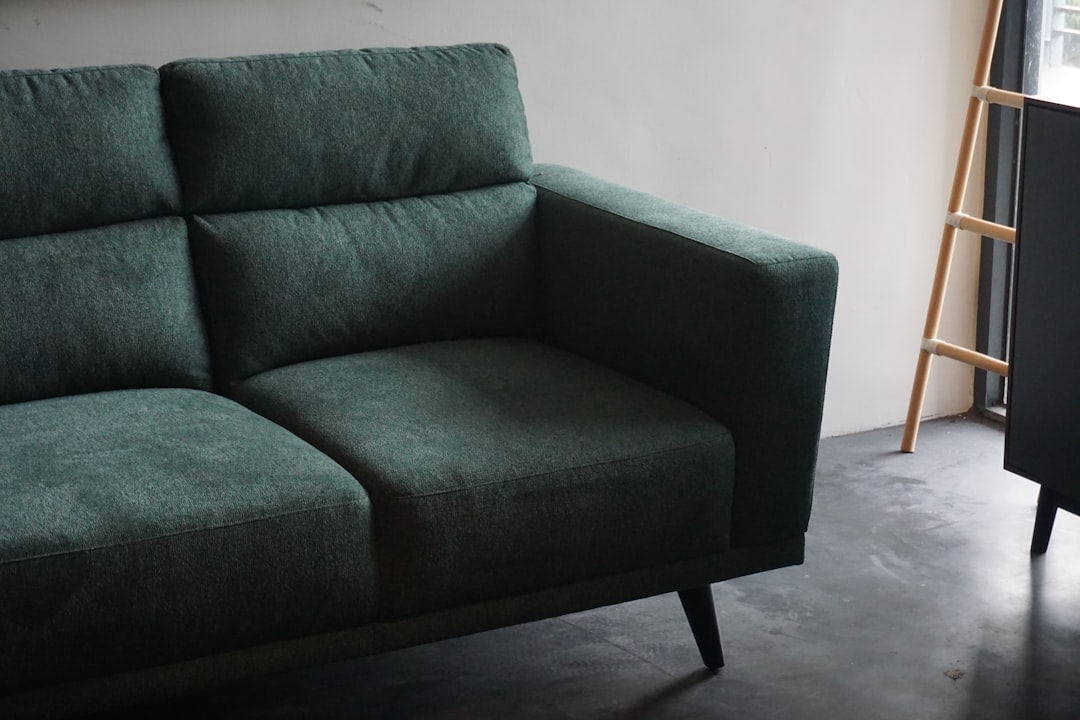
So the practical takeaway is this: if you’re in a compact space, lean towards materials where repairs are localised and panels can be swapped independently. Performance fabrics and many modular designs score well here. Full-grain leather is a beautiful, long-lasting investment, but only if you’ve got the room to let someone work on it properly later on. The one exception is a smaller, freestanding armchair—that’s a manageable project even in a snug flat, because you can just turn it around. For a large sectional sofa that’s going to be a permanent fixture in your living room, though, think about how a repair person would actually reach the damaged spot. It’s not just about the material’s upfront cost; it’s about the feasibility of fixing it five years down the line, when that afternoon sun has faded one corner or a pet has found a favourite spot to scratch.
The Joo Seng and Tampines showrooms are where you can actually get your hands on things. You walk in, see the fabric sofa range, and there's no barrier between you and the piece you might buy for years. That's the concrete advantage—you can sit down, lean back, and feel the weight distribution yourself. A sofa that looks steady online might wobble when you shift your weight, and you'll only know that by putting your full weight on it in the showroom.
Don't just perch politely. Really test it. Settle into the seat, lean sideways against the backrest, and push down on the armrests. A solid frame won't creak or feel like it's shifting under you. Check the fabric weave too—a tight, dense weave will hold up better against daily wear, while a loose one might pill or snag over time. You can't assess that from a picture on a screen.
Some buyers hesitate to handle showroom pieces like they own them, but that's exactly what you should do. If you're spending over two thousand dollars, you need to verify the quality on the premium pieces before committing. The in-house ranges are there for you to judge frame rigidity and cushion density firsthand. A high-density foam cushion feels firm and supportive, not like you're sinking into a soft cloud that'll flatten out in a year.

The one exception? If you're absolutely certain about a specific model and have measured your space perfectly, maybe you can skip the physical test. But for most people, especially those less comfortable with online-only purchases, the trip is worth it. You'll leave knowing exactly what you're getting, and that confidence is part of the value.
In showrooms across Joo Seng and Sungei Kadut, buyers eyeing the premium ranges often circle back to the same structural concerns. They’re not just looking at fabric colour or cushion softness—they’re trying to gauge what’s underneath, the parts you can’t see once it’s delivered. Their questions are practical and pointed, born from a kiasu desire to ensure a significant investment won’t turn into a regret within a few humid seasons.
How long should a SGD $3,000 sofa frame last? That depends entirely on the frame material and the daily load it carries. A solid-wood or kiln-dried plywood construction in a four-room flat with normal use should see a decade or more, while a frame built with particleboard in a household with kids jumping on it might start showing weakness much sooner. The real answer isn’t in a warranty booklet; it’s in the showroom, where you can ask to see a cutaway sample or feel the weight of a bare frame section.
Can sofa frames be repaired in Singapore? Got repair services or not? Yes, but the feasibility hinges on the damage and the original build. A cracked solid wood leg can often be replaced or reinforced by a skilled carpenter. However, if the internal plywood rails have softened from prolonged moisture exposure—a real risk in our climate—the repair becomes a major reconstruction, often costing nearly as much as a new mid-range sofa. It’s one of those things where prevention, through choosing stable materials and keeping the piece dry, is far better than cure.
What wood is best for humid climates? Kiln-dried hardwoods like rubberwood are common here because they’re relatively stable. Teak is excellent but often pushes the price beyond that $3,000 mark. The critical point many miss is that the joinery and finish matter just as much as the timber species—a properly sealed corner block in a plywood frame can outperform a poorly assembled solid wood one. Don’t just ask for the wood type; ask how the joints are fastened and if they’re protected from ambient moisture.
Do all high-end sofas have reinforced corners? They should, but it’s not a given. A true premium piece will have double-doweled or bolted corner blocks, sometimes with metal brackets for extra security in a landed home where the sofa might be rearranged often. In a showroom, you can’t see this, but you can test it: try to gently rack the sofa by pushing diagonally on a corner—if there’s any noticeable flex or creak, the internal reinforcement might be insufficient. That’s a check worth doing before you commit.
You’ve walked around, sat down, and maybe even liked the colour. But before you sign anything, there’s a final round of checks that’s worth your time—especially if you’re planning to keep this sofa for a decade or more. Start with the things you can’t see once the cushions are on. Lift every cushion and press your hand along the joinery underneath; gaps or rough edges here mean the frame wasn’t finished properly, and that’s a sign of corners cut elsewhere. Then, sit firmly and shift your weight from side to side, listening closely. A premium sofa shouldn’t groan or creak under a normal person’s movement—that noise often points to joints that aren’t tight or materials that aren’t sturdy enough for the long haul.
For older buyers, comfort isn’t just about softness; it’s about support that doesn’t degrade. Lean back, get up, and sit down again a few times, paying attention to how the seat feels after repeated use. Does the cushion rebound properly, or does it start to feel compressed? A good foam should hold its shape through this simple test. And don’t just sit politely—really settle into it as you would at home. If getting out of it feels like a struggle, that’s a red flag for daily life.
One detail that’s easily missed is how the finish handles light. If your living room gets that strong afternoon sun, especially in a west-facing flat, ask to see the sofa in the brightest part of the showroom. Place a cushion or a sample of the fabric directly under a spotlight or near a window. Check if the colour looks true and the material doesn’t show a cheap, plastic-like sheen under intense light. Leather should feel rich, not thin and glossy; fabric should have depth, not look washed out. This isn’t about fading over years—that’s a separate issue—it’s about spotting a finish that’s already poor quality before you even take it home.
Finally, verify every point you’ve already noted. Match the fabric swatch you’re holding to the actual sofa on display—sometimes batch variations can surprise you. Confirm the exact dimensions against your own floor plan notes. And make sure any special requests, like a different cushion filling or a specific leg finish, are clearly noted on your order form. Once payment is made, changes become much harder. The only time you might skip a step is if you’re absolutely certain about a model you’ve bought before, but with a new piece, this diligence is your best insurance.